
• The global Outdoor Furniture Market is experiencing a profound structural evolution, shifting from seasonal, disposable purchases to high-durability, design-forward lifestyle investments. According to a comprehensive market intelligence report published by Stellar Market Research, the industry is valued at USD 20.5 billion in 2026 and is poised to scale to USD 24.98 billion by 2031, registering a compound annual growth rate (CAGR) of 4.04% over the forecast period. This report highlights why premium outdoor living assets have become vital components of both modern residential architecture and commercial hospitality infrastructure.

    A central market transformation is the premiumization and material upgrading of outdoor layouts. Discretionary buyers and commercial developers are no longer settling for short-lived plastic or untreated wood; instead, they demand UV-resistant, marine-grade, and weather-defying materials backed by decade-long warranties. Concurrently, stricter environmental regulations and corporate ESG mandates are forcing manufacturers to adopt circular design frameworks—such as recycled ocean plastics, sustainably harvested teak, and bio-composites—redefining competitive advantage across global value chains.

    Key Findings from the Report
    Market Valuation & Trajectory: The global outdoor furniture market stands at USD 20.5 billion in 2026, advancing to USD 24.98 billion by 2031 at a 4.04% CAGR.

    Dominant Product Segment: Outdoor chairs and traditional seating configurations accounted for 39.70% of total market revenue, anchoring bundled residential and commercial patio packages.

    Fastest-Growing Product Segment: Loungers and daybeds represent the fastest-growing category, expanding at a robust 5.68% CAGR due to rising investments in wellness-focused pool decks and hospitality relaxation zones.

    Material Share & Innovation: Wood preserved a leading 39.60% market share backed by the aesthetic and tactile dominance of teak, while recycled polymers and eco-composites emerged as the fastest-growing material segment.

    Distribution Channels: B2B and contractor routes represented 58.60% of the market share, driven by large-scale hospitality and corporate real estate projects, while online B2C channels advanced at a rapid 6.86% CAGR.

    Regional Dominance: Asia-Pacific commanded 45.70% of the global outdoor furniture market share, supported by robust manufacturing capabilities in China and expanding real estate sectors in India and Southeast Asia.

    Investment Relevance: Rising average transaction values—shifting from mass-tier sets ($300–$500) to mid-and-high tiers ($800–$2,000)—demonstrate high margin potential for premium brand portfolios.

    For further information, click the following link:https://www.stellarmr.com/report/req_sample/outdoor-furniture-market/2660
    The global Outdoor Furniture Market is experiencing a profound structural evolution, shifting from seasonal, disposable purchases to high-durability, design-forward lifestyle investments. According to a comprehensive market intelligence report published by Stellar Market Research, the industry is valued at USD 20.5 billion in 2026 and is poised to scale to USD 24.98 billion by 2031, registering a compound annual growth rate (CAGR) of 4.04% over the forecast period. This report highlights why premium outdoor living assets have become vital components of both modern residential architecture and commercial hospitality infrastructure. A central market transformation is the premiumization and material upgrading of outdoor layouts. Discretionary buyers and commercial developers are no longer settling for short-lived plastic or untreated wood; instead, they demand UV-resistant, marine-grade, and weather-defying materials backed by decade-long warranties. Concurrently, stricter environmental regulations and corporate ESG mandates are forcing manufacturers to adopt circular design frameworks—such as recycled ocean plastics, sustainably harvested teak, and bio-composites—redefining competitive advantage across global value chains. Key Findings from the Report Market Valuation & Trajectory: The global outdoor furniture market stands at USD 20.5 billion in 2026, advancing to USD 24.98 billion by 2031 at a 4.04% CAGR. Dominant Product Segment: Outdoor chairs and traditional seating configurations accounted for 39.70% of total market revenue, anchoring bundled residential and commercial patio packages. Fastest-Growing Product Segment: Loungers and daybeds represent the fastest-growing category, expanding at a robust 5.68% CAGR due to rising investments in wellness-focused pool decks and hospitality relaxation zones. Material Share & Innovation: Wood preserved a leading 39.60% market share backed by the aesthetic and tactile dominance of teak, while recycled polymers and eco-composites emerged as the fastest-growing material segment. Distribution Channels: B2B and contractor routes represented 58.60% of the market share, driven by large-scale hospitality and corporate real estate projects, while online B2C channels advanced at a rapid 6.86% CAGR. Regional Dominance: Asia-Pacific commanded 45.70% of the global outdoor furniture market share, supported by robust manufacturing capabilities in China and expanding real estate sectors in India and Southeast Asia. Investment Relevance: Rising average transaction values—shifting from mass-tier sets ($300–$500) to mid-and-high tiers ($800–$2,000)—demonstrate high margin potential for premium brand portfolios. For further information, click the following link:https://www.stellarmr.com/report/req_sample/outdoor-furniture-market/2660
    0 Comments 0 Shares
  • https://www.businessmarketinsights.com/reports/water-treatment-polymers-market?utm_source=social&utm_medium=1021
    https://www.businessmarketinsights.com/reports/water-treatment-polymers-market?utm_source=social&utm_medium=1021
    WWW.BUSINESSMARKETINSIGHTS.COM
    Water Treatment Polymers Market Size, Share & Trends by 2033
    Water Treatment Polymers market is slated to hit US$ 74.07 Billion by 2033, growing at a CAGR of 7.90%. Explore share, demand, opportunities and top companies analysis.
    0 Comments 0 Shares
  • The Office Furniture Market, indicating that the sector was valued at USD 109.26 billion in 2025 and is projected to expand at a robust compound annual growth rate (CAGR) of 7.69% through 2032. The comprehensive market intelligence report highlights a massive paradigm shift toward agile, tech-integrated, and health-conscious workplace environments as multinational corporations restructure physical real estate for hybrid models.

    Key Findings from the Report
    Market Valuation: Valued at USD 109.26 billion in 2025, heading toward USD 183.52 billion by 2032.

    Growth Trajectory: Poised for consistent expansion at a 7.69% CAGR during the 2026–2032 forecast window.

    Dominant Product Segment: Seating continues to command the largest market share, propelled by stringent occupational health standards and deep corporate spending on employee wellness.

    Fastest-Growing Segment: Workstations and cubicles are registering the highest growth rate, supported by rising demand for collaborative, modular office layouts.

    Material Dynamics: While wood retains traditional aesthetic dominance, segmented steel variants are gaining rapid traction due to their superior durability, safety, and structural cable-management capacities.

    Regional Powerhouse: The Asia-Pacific region stands as the dominant market and manufacturing hub, anchored by rapid commercial real estate development in China and India.

    Investment Relevance: Direct B2B sales channels remain primary among institutional buyers prioritizing brand compliance, vendor reliability, and comprehensive lifecycle support.

    For further information, click the following link:https://www.stellarmr.com/report/req_sample/office-furniture-market/2478

    Market Drivers and Restraints
    Drivers
    Proliferation of Hybrid and Co-Working Spaces: The permanent adoption of flexible working models has spurred demand for multi-functional, easily reconfigurable furniture systems that optimize office real estate footprints.

    Focus on Employee Ergonomics and Wellness: Rising corporate awareness regarding musculoskeletal disorders and posture health has elevated ergonomic seating and height-adjustable desks from luxury amenities to operational essentials.

    Smart Corporate Infrastructure Integration: The rise of smart offices integrated with IoT sensors has amplified the need for intelligent, cable-managed workstations that track utilization and enhance productivity.

    Restraints
    High Raw Material Volatility: Fluctuating costs for premium timber, specialized metals, and polymers create margin compression for manufacturers.

    Complex Global Supply Chain Disruptions: Persistent logistics bottlenecks and localized trade barriers lead to procurement delays and elevated operational expenditures.

    Technology, Regulation, and Sustainability Trends
    The office furniture sector is witnessing a sweeping convergence of digital technology and circular economy principles. Leading manufacturers are deploying AI-enabled design tools and sensor-integrated IoT systems to optimize office layouts. Regulatory pressures regarding carbon footprints have accelerated Environmental, Social, and Governance (ESG) compliance, compelling brands to utilize recycled plastics, sustainably harvested woods, and VOC-free finishes. Furthermore, strict international building and safety codes are requiring rigorous fire-retardant and durability testing for all commercial-grade installations.

    The Office Furniture Market, indicating that the sector was valued at USD 109.26 billion in 2025 and is projected to expand at a robust compound annual growth rate (CAGR) of 7.69% through 2032. The comprehensive market intelligence report highlights a massive paradigm shift toward agile, tech-integrated, and health-conscious workplace environments as multinational corporations restructure physical real estate for hybrid models. Key Findings from the Report Market Valuation: Valued at USD 109.26 billion in 2025, heading toward USD 183.52 billion by 2032. Growth Trajectory: Poised for consistent expansion at a 7.69% CAGR during the 2026–2032 forecast window. Dominant Product Segment: Seating continues to command the largest market share, propelled by stringent occupational health standards and deep corporate spending on employee wellness. Fastest-Growing Segment: Workstations and cubicles are registering the highest growth rate, supported by rising demand for collaborative, modular office layouts. Material Dynamics: While wood retains traditional aesthetic dominance, segmented steel variants are gaining rapid traction due to their superior durability, safety, and structural cable-management capacities. Regional Powerhouse: The Asia-Pacific region stands as the dominant market and manufacturing hub, anchored by rapid commercial real estate development in China and India. Investment Relevance: Direct B2B sales channels remain primary among institutional buyers prioritizing brand compliance, vendor reliability, and comprehensive lifecycle support. For further information, click the following link:https://www.stellarmr.com/report/req_sample/office-furniture-market/2478 Market Drivers and Restraints Drivers Proliferation of Hybrid and Co-Working Spaces: The permanent adoption of flexible working models has spurred demand for multi-functional, easily reconfigurable furniture systems that optimize office real estate footprints. Focus on Employee Ergonomics and Wellness: Rising corporate awareness regarding musculoskeletal disorders and posture health has elevated ergonomic seating and height-adjustable desks from luxury amenities to operational essentials. Smart Corporate Infrastructure Integration: The rise of smart offices integrated with IoT sensors has amplified the need for intelligent, cable-managed workstations that track utilization and enhance productivity. Restraints High Raw Material Volatility: Fluctuating costs for premium timber, specialized metals, and polymers create margin compression for manufacturers. Complex Global Supply Chain Disruptions: Persistent logistics bottlenecks and localized trade barriers lead to procurement delays and elevated operational expenditures. Technology, Regulation, and Sustainability Trends The office furniture sector is witnessing a sweeping convergence of digital technology and circular economy principles. Leading manufacturers are deploying AI-enabled design tools and sensor-integrated IoT systems to optimize office layouts. Regulatory pressures regarding carbon footprints have accelerated Environmental, Social, and Governance (ESG) compliance, compelling brands to utilize recycled plastics, sustainably harvested woods, and VOC-free finishes. Furthermore, strict international building and safety codes are requiring rigorous fire-retardant and durability testing for all commercial-grade installations.
    0 Comments 0 Shares
  • The global Flame Retardants for Aerospace Plastics Market is undergoing a structural transition toward high-performance, non-halogenated chemistry solutions, according to a comprehensive study by Stellar Market Research. Valued at USD 34.90 Million in 2023, the market is projected to reach USD 56.78 Million by 2030, advancing at a Compound Annual Growth Rate (CAGR) of 7.2% over the forecast period.


    Key Findings from the Report
    Market Valuation: Global market size to expand from USD 34.90 Million in 2023 to USD 56.78 Million by 2030, reflecting a solid 7.2% CAGR.

    Interior Components Dominance: Interior panels, seat covers, overhead bins, and floorings generated over 50% of total revenue, remaining the largest application segment due to strict cabin burn-resistance standards.

    Composite Acceleration: Carbon Fiber Reinforced Polymers (CFRP) and high-temperature thermoplastics (e.g., PEEK) represent the fastest-growing resin category, surging at over 8% CAGR as OEMs eliminate metal airframe brackets.

    Shift to Non-Halogenated Formulations: Halogen-free, phosphorus, and aluminum trihydrate (ATH) additives are outpacing traditional brominated chemicals, capturing primary market share gains across North American and European production lines.

    Asia-Pacific Growth Engine: While North America remains the revenue leader, the Asia-Pacific region will record the highest CAGR, propelled by surging commercial fleet deliveries and localized aviation manufacturing in China and India.

    Additive Manufacturing Synergy: Specialty flame-retardant powders for 3D-printed interior replacement parts represent a high-margin growth niche for chemical suppliers.

    For further information, click the following link:https://www.stellarmr.com/report/req_sample/Flame-Retardants-for-Aerospace-Plastics-Market/1544
    The global Flame Retardants for Aerospace Plastics Market is undergoing a structural transition toward high-performance, non-halogenated chemistry solutions, according to a comprehensive study by Stellar Market Research. Valued at USD 34.90 Million in 2023, the market is projected to reach USD 56.78 Million by 2030, advancing at a Compound Annual Growth Rate (CAGR) of 7.2% over the forecast period. Key Findings from the Report Market Valuation: Global market size to expand from USD 34.90 Million in 2023 to USD 56.78 Million by 2030, reflecting a solid 7.2% CAGR. Interior Components Dominance: Interior panels, seat covers, overhead bins, and floorings generated over 50% of total revenue, remaining the largest application segment due to strict cabin burn-resistance standards. Composite Acceleration: Carbon Fiber Reinforced Polymers (CFRP) and high-temperature thermoplastics (e.g., PEEK) represent the fastest-growing resin category, surging at over 8% CAGR as OEMs eliminate metal airframe brackets. Shift to Non-Halogenated Formulations: Halogen-free, phosphorus, and aluminum trihydrate (ATH) additives are outpacing traditional brominated chemicals, capturing primary market share gains across North American and European production lines. Asia-Pacific Growth Engine: While North America remains the revenue leader, the Asia-Pacific region will record the highest CAGR, propelled by surging commercial fleet deliveries and localized aviation manufacturing in China and India. Additive Manufacturing Synergy: Specialty flame-retardant powders for 3D-printed interior replacement parts represent a high-margin growth niche for chemical suppliers. For further information, click the following link:https://www.stellarmr.com/report/req_sample/Flame-Retardants-for-Aerospace-Plastics-Market/1544
    1
    0 Comments 0 Shares
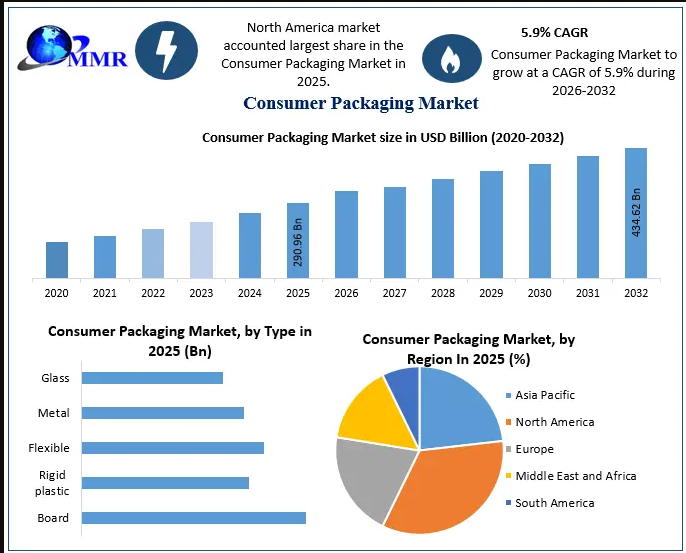
  • Global Consumer Packaging Market Growth Accelerated by Expanding Sustainable Packaging Adoption and Advanced Digital Packaging Technologies
    Market Overview
    The Global Consumer Packaging Market is witnessing strong growth driven by rising demand for environmentally friendly packaging solutions, increasing consumption of packaged consumer goods, rapid expansion of e-commerce, and continuous innovation in packaging materials and manufacturing technologies. Consumer packaging is essential for product protection, branding, transportation, and regulatory compliance across food & beverages, pharmaceuticals, personal care, home care, and consumer electronics industries. Increasing investments in recyclable, reusable, and biodegradable packaging are expected to support market expansion throughout the forecast period.

    Get Full PDF Sample Copy of Report:
    https://www.maximizemarketresearch.com/request-sample/26857/

    Technology and Innovation Landscape
    Technological advancements are revolutionizing the consumer packaging market through sustainable materials, intelligent packaging systems, and automation-driven manufacturing.

    Innovations such as AI-powered packaging design software, recyclable mono-material packaging, compostable bio-based polymers, RFID-enabled tracking systems, NFC-enabled smart packaging, QR code-based consumer engagement platforms, antimicrobial and active packaging technologies, digital printing solutions, lightweight high-barrier flexible packaging, and IoT-enabled packaging monitoring systems are increasingly being adopted. These innovations improve product protection, enhance supply chain visibility, reduce environmental impact, and strengthen consumer engagement.

    Largest Market Segment Analysis
    The Plastic Packaging Segment continues to dominate the market owing to its durability, lightweight characteristics, cost efficiency, and extensive applications across food & beverages, healthcare, cosmetics, personal care, and household products.

    Its broad manufacturing base and versatility continue to maintain segment leadership.

    Fastest-Growing Segment Analysis
    The Flexible Packaging Segment is expected to witness the fastest growth due to increasing demand for lightweight, cost-effective, and recyclable packaging solutions, particularly across food, beverage, pharmaceutical, and personal care applications.

    Continuous innovations in sustainable flexible materials are further accelerating segment growth.

    Regional Insights
    Asia Pacific remains the dominant regional market owing to rapid industrialization, expanding manufacturing activities, increasing urbanization, rising disposable incomes, and strong growth in packaged consumer goods and e-commerce.

    North America maintains a significant market share supported by advanced packaging technologies, growing investments in sustainable materials, increasing demand for premium packaging, and rapid adoption of smart packaging solutions.

    Europe is expected to witness substantial growth due to stringent environmental regulations, ambitious circular economy initiatives, increasing recycling targets, and widespread adoption of recyclable and bio-based packaging materials.

    Competitive Landscape
    Key players

    Global:

    Amcor plc

    Berry Global Inc.

    Mondi plc

    Sonoco Products Company

    Sealed Air Corporation

    Get Full PDF Sample Copy of Report:
    https://www.maximizemarketresearch.com/request-sample/26857/

    Market Dynamics
    The market is driven by increasing demand for packaged consumer goods, growing environmental awareness, rapid growth of e-commerce, and continuous innovation in sustainable and smart packaging technologies.

    However, challenges such as volatile raw material prices, stringent environmental regulations, higher production costs for eco-friendly packaging materials, and limitations in recycling infrastructure may restrain market growth.

    Despite these challenges, increasing investments in biodegradable materials, smart packaging technologies, digital printing innovations, recyclable packaging solutions, and circular economy initiatives are expected to create significant growth opportunities.

    Get access to the full description of the report:
    https://www.maximizemarketresearch.com/market-report/global-consumer-packaging-market/26857/

    About Maximize Market Research
    Maximize Market Research Pvt. Ltd. is a global market intelligence and consulting firm delivering data-driven insights and comprehensive industry analysis across packaging, consumer goods, manufacturing, sustainability, chemicals, and industrial markets.
    Global Consumer Packaging Market Growth Accelerated by Expanding Sustainable Packaging Adoption and Advanced Digital Packaging Technologies Market Overview The Global Consumer Packaging Market is witnessing strong growth driven by rising demand for environmentally friendly packaging solutions, increasing consumption of packaged consumer goods, rapid expansion of e-commerce, and continuous innovation in packaging materials and manufacturing technologies. Consumer packaging is essential for product protection, branding, transportation, and regulatory compliance across food & beverages, pharmaceuticals, personal care, home care, and consumer electronics industries. Increasing investments in recyclable, reusable, and biodegradable packaging are expected to support market expansion throughout the forecast period. Get Full PDF Sample Copy of Report: https://www.maximizemarketresearch.com/request-sample/26857/ Technology and Innovation Landscape Technological advancements are revolutionizing the consumer packaging market through sustainable materials, intelligent packaging systems, and automation-driven manufacturing. Innovations such as AI-powered packaging design software, recyclable mono-material packaging, compostable bio-based polymers, RFID-enabled tracking systems, NFC-enabled smart packaging, QR code-based consumer engagement platforms, antimicrobial and active packaging technologies, digital printing solutions, lightweight high-barrier flexible packaging, and IoT-enabled packaging monitoring systems are increasingly being adopted. These innovations improve product protection, enhance supply chain visibility, reduce environmental impact, and strengthen consumer engagement. Largest Market Segment Analysis The Plastic Packaging Segment continues to dominate the market owing to its durability, lightweight characteristics, cost efficiency, and extensive applications across food & beverages, healthcare, cosmetics, personal care, and household products. Its broad manufacturing base and versatility continue to maintain segment leadership. Fastest-Growing Segment Analysis The Flexible Packaging Segment is expected to witness the fastest growth due to increasing demand for lightweight, cost-effective, and recyclable packaging solutions, particularly across food, beverage, pharmaceutical, and personal care applications. Continuous innovations in sustainable flexible materials are further accelerating segment growth. Regional Insights Asia Pacific remains the dominant regional market owing to rapid industrialization, expanding manufacturing activities, increasing urbanization, rising disposable incomes, and strong growth in packaged consumer goods and e-commerce. North America maintains a significant market share supported by advanced packaging technologies, growing investments in sustainable materials, increasing demand for premium packaging, and rapid adoption of smart packaging solutions. Europe is expected to witness substantial growth due to stringent environmental regulations, ambitious circular economy initiatives, increasing recycling targets, and widespread adoption of recyclable and bio-based packaging materials. Competitive Landscape Key players Global: Amcor plc Berry Global Inc. Mondi plc Sonoco Products Company Sealed Air Corporation Get Full PDF Sample Copy of Report: https://www.maximizemarketresearch.com/request-sample/26857/ Market Dynamics The market is driven by increasing demand for packaged consumer goods, growing environmental awareness, rapid growth of e-commerce, and continuous innovation in sustainable and smart packaging technologies. However, challenges such as volatile raw material prices, stringent environmental regulations, higher production costs for eco-friendly packaging materials, and limitations in recycling infrastructure may restrain market growth. Despite these challenges, increasing investments in biodegradable materials, smart packaging technologies, digital printing innovations, recyclable packaging solutions, and circular economy initiatives are expected to create significant growth opportunities. Get access to the full description of the report: https://www.maximizemarketresearch.com/market-report/global-consumer-packaging-market/26857/ About Maximize Market Research Maximize Market Research Pvt. Ltd. is a global market intelligence and consulting firm delivering data-driven insights and comprehensive industry analysis across packaging, consumer goods, manufacturing, sustainability, chemicals, and industrial markets.
    0 Comments 0 Shares
  • The Global Piperazine Market is projected to grow from USD 79 Million in 2023 to USD 92 Million by 2030 at a CAGR of 2.2%, driven by pharmaceutical and polymer applications.

    Sample Report: https://www.24chemicalresearch.com/download-sample/266018/global-piperazine-market

    Full Report: https://www.24chemicalresearch.com/reports/266018/global-piperazine-market

    #MarketResearch, #Piperazine, #Pharmaceuticals, #SpecialtyChemicals, #ChemicalIndustry, #Polymers
    The Global Piperazine Market is projected to grow from USD 79 Million in 2023 to USD 92 Million by 2030 at a CAGR of 2.2%, driven by pharmaceutical and polymer applications. Sample Report: https://www.24chemicalresearch.com/download-sample/266018/global-piperazine-market Full Report: https://www.24chemicalresearch.com/reports/266018/global-piperazine-market #MarketResearch, #Piperazine, #Pharmaceuticals, #SpecialtyChemicals, #ChemicalIndustry, #Polymers
    WWW.24CHEMICALRESEARCH.COM
    Sample Report: Piperazine Market Supply and Demand Analysis - Global Outlook and Forecast 2026-2033 (Production and Consumption Analysis)
    Download Sample Report PDF : Global Piperazine market was valued at USD 79 million in 2023 and is projected to reach USD 92 million by 2030, at a CAGR of 2.2% during the forecast period.
    0 Comments 0 Shares
  • Global Biobased Thermosetting Polymers Market is projected to grow from USD 3.78 billion in 2025 to USD 6.92 billion by 2032 at a 9.1% CAGR, driven by sustainability initiatives, renewable materials demand, and growth in automotive and construction sectors.

    Sample Report: https://www.24chemicalresearch.com/download-sample/204448/global-biobased-thermosetting-polymers-forecast-market

    Full Report: https://www.24chemicalresearch.com/reports/204448/global-biobased-thermosetting-polymers-forecast-market

    #BiobasedPolymers,#ThermosettingPolymers,#SustainableMaterials,#GreenChemistry,#AutomotiveMaterials,#ConstructionMaterials,#MarketResearch
    Global Biobased Thermosetting Polymers Market is projected to grow from USD 3.78 billion in 2025 to USD 6.92 billion by 2032 at a 9.1% CAGR, driven by sustainability initiatives, renewable materials demand, and growth in automotive and construction sectors. Sample Report: https://www.24chemicalresearch.com/download-sample/204448/global-biobased-thermosetting-polymers-forecast-market Full Report: https://www.24chemicalresearch.com/reports/204448/global-biobased-thermosetting-polymers-forecast-market #BiobasedPolymers,#ThermosettingPolymers,#SustainableMaterials,#GreenChemistry,#AutomotiveMaterials,#ConstructionMaterials,#MarketResearch
    WWW.24CHEMICALRESEARCH.COM
    Sample Report: Biobased Thermosetting Polymers Market, Global Outlook and Forecast 2026-2034
    Download Sample Report PDF : Biobased Thermosetting Polymers market is valued at USD 3.45 billion in 2024 and is projected to reach USD 6.92 billion by 2032, growing at 9.1?GR.
    0 Comments 0 Shares
  • Global 1,1-Bis(4-hydroxyphenyl)cyclohexane (Bisphenol Z) Market is projected to grow from USD 196.2 Million in 2026 to USD 312.8 Million by 2034 at a CAGR of 5.9%, driven by demand for BPA-free polymers, optical materials, and high-performance resins.

    Sample: https://www.24chemicalresearch.com/download-sample/307984/biscyclohexane-market

    Full Report: https://www.24chemicalresearch.com/reports/307984/biscyclohexane-market

    #BisphenolZ, #EngineeringPlastics, #EpoxyResins, #Polycarbonate, #MarketResearch
    Global 1,1-Bis(4-hydroxyphenyl)cyclohexane (Bisphenol Z) Market is projected to grow from USD 196.2 Million in 2026 to USD 312.8 Million by 2034 at a CAGR of 5.9%, driven by demand for BPA-free polymers, optical materials, and high-performance resins. Sample: https://www.24chemicalresearch.com/download-sample/307984/biscyclohexane-market Full Report: https://www.24chemicalresearch.com/reports/307984/biscyclohexane-market #BisphenolZ, #EngineeringPlastics, #EpoxyResins, #Polycarbonate, #MarketResearch
    WWW.24CHEMICALRESEARCH.COM
    Sample Report: 1,1-Bis(4-hydroxyphenyl)cyclohexane (CAS 843-55-0) Market Research Report 2026-2033 (Status and Outlook)
    Download Sample Report PDF : Global Bisphenol Z (CAS 843-55-0) market was valued at USD 187.4 million in 2025 and is projected to reach USD 312.8 million by 2034, at a CAGR of 5.9%.
    0 Comments 0 Shares
  • Global Functional Bio-based Chemicals market is projected to grow from USD 9.2 Million in 2025 to USD 18.5 Million by 2034, at a CAGR of 7.5%. Rising demand for sustainable packaging, bio-based polymers, and green chemicals is driving growth.
    https://www.24chemicalresearch.com/reports/312755/functional-biobased-chemicals-market

    #MarketResearch, #BioBasedChemicals, #GreenChemistry, #SustainableMaterials, #CircularEconomy
    Global Functional Bio-based Chemicals market is projected to grow from USD 9.2 Million in 2025 to USD 18.5 Million by 2034, at a CAGR of 7.5%. Rising demand for sustainable packaging, bio-based polymers, and green chemicals is driving growth. https://www.24chemicalresearch.com/reports/312755/functional-biobased-chemicals-market #MarketResearch, #BioBasedChemicals, #GreenChemistry, #SustainableMaterials, #CircularEconomy
    WWW.24CHEMICALRESEARCH.COM
    Functional Bio-based Chemicals Market Research Report 2026-2034 (Status and Outlook)
    Functional Bio based Chemicals Global Functional Bio-based Chemicals market valued at USD 9.2?million in 2025, projected to reach USD 18.5?million by 2034, CAGR 7.5%.
    0 Comments 0 Shares
  • https://optinestservices.blogspot.com/2026/06/medical-polymers-market-size-share.html
    https://optinestservices.blogspot.com/2026/06/medical-polymers-market-size-share.html
    Medical Polymers Market Size, Share, Trends, Key Drivers, Demand and Opportunity Analysis
      " According to the latest report published by Data Bridge Market Research, the Medical Polymers Market The global medical polymers market...
    0 Comments 0 Shares
No data to show
No data to show
No data to show
No data to show
No data to show