• ๐Ÿงฌ The Digital Genome Market is Accelerating Toward $218.72B by 2032!

    Source @ https://www.maximizemarketresearch.com/market-report/global-digital-genome-market/35568/

    Precision medicine is no longer a futuristic concept—it’s the new standard for modern healthcare. Powered by rapid Next-Generation Sequencing (NGS), cloud informatics, and AI-driven variant interpretation, digital genomics is transforming oncology, rare disease diagnosis, and biopharma research.

    Key Growth Drivers:

    Targeted Therapeutics: Expanding demand for biomarker-guided oncology and personalized treatments.

    Cost Efficiency: Diminishing sequencing costs making whole-genome profiling accessible to mainstream clinical workflows.

    AI & Cloud Integration: High-throughput computational pipelines converting raw genomic data into actionable clinical insights.

    As the industry shifts from basic sequencing to integrated multi-omics, digital genomic data is establishing itself as the core backbone of 21st-century healthcare delivery.

    ๐Ÿ“Š Read the full market breakdown here: https://www.maximizemarketresearch.com/market-report/global-digital-genome-market/35568/

    #DigitalGenome #Genomics #PrecisionMedicine #Bioinformatics #HealthTech #MedTech #MarketResearch #B2BInsights
    ๐Ÿงฌ The Digital Genome Market is Accelerating Toward $218.72B by 2032! Source @ https://www.maximizemarketresearch.com/market-report/global-digital-genome-market/35568/ Precision medicine is no longer a futuristic concept—it’s the new standard for modern healthcare. Powered by rapid Next-Generation Sequencing (NGS), cloud informatics, and AI-driven variant interpretation, digital genomics is transforming oncology, rare disease diagnosis, and biopharma research. Key Growth Drivers: Targeted Therapeutics: Expanding demand for biomarker-guided oncology and personalized treatments. Cost Efficiency: Diminishing sequencing costs making whole-genome profiling accessible to mainstream clinical workflows. AI & Cloud Integration: High-throughput computational pipelines converting raw genomic data into actionable clinical insights. As the industry shifts from basic sequencing to integrated multi-omics, digital genomic data is establishing itself as the core backbone of 21st-century healthcare delivery. ๐Ÿ“Š Read the full market breakdown here: https://www.maximizemarketresearch.com/market-report/global-digital-genome-market/35568/ #DigitalGenome #Genomics #PrecisionMedicine #Bioinformatics #HealthTech #MedTech #MarketResearch #B2BInsights
    Digital Genome Market – Global Industry Analysis and Forecast (2025-2032) โ€“ By Product, Application, End-User and Region.
    0 Comments 0 Shares
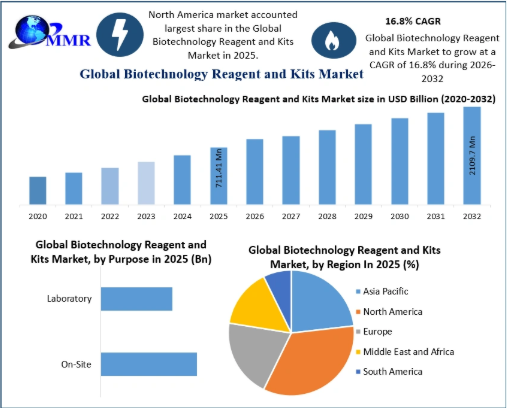
  • Global Biotechnology Reagents and Kits Market Growth Fueled by Rising Demand for Precision Diagnostics and Expanding Biotechnology Research Activities
    Market Overview
    The Global Biotechnology Reagents and Kits Market is experiencing robust growth driven by increasing investments in biotechnology and pharmaceutical research, growing demand for molecular diagnostics, expanding applications in genomics, proteomics, immunology, and cell biology, and rising adoption of precision medicine. Biotechnology reagents and kits are widely utilized across pharmaceutical companies, biotechnology firms, research institutes, hospitals, academic laboratories, and diagnostic centers for PCR, DNA/RNA extraction, sequencing, cell culture, immunoassays, protein analysis, biomarker discovery, and gene-editing applications. Continuous innovation in laboratory technologies and increasing global healthcare expenditure are expected to drive market growth throughout the forecast period.

    Get Full PDF Sample Copy of Report:
    https://www.maximizemarketresearch.com/request-sample/114388/

    Technology and Innovation Landscape
    Technological advancements are reshaping the biotechnology reagents and kits market through artificial intelligence, laboratory automation, next-generation sequencing, and advanced molecular biology platforms.

    Innovations such as AI-powered laboratory workflow optimization, CRISPR-Cas9 gene-editing reagent kits, next-generation sequencing (NGS) library preparation reagents, digital PCR systems, automated nucleic acid extraction technologies, multiplex molecular diagnostic assays, single-cell genomics reagents, advanced immunoassay platforms, microfluidic lab-on-chip technologies, and cloud-based laboratory information management systems (LIMS) are increasingly being adopted. These technologies enhance analytical accuracy, laboratory efficiency, reproducibility, throughput, and research productivity.

    Largest Market Segment Analysis
    The PCR Reagents and Kits Segment continues to dominate the market owing to its extensive use in infectious disease diagnosis, oncology research, genetic testing, forensic analysis, pharmaceutical development, and academic research.

    Its high sensitivity, rapid turnaround time, and broad applicability continue to reinforce its dominant market position.

    Fastest-Growing Segment Analysis
    The Next-Generation Sequencing (NGS) Reagents and Kits Segment is expected to witness the fastest growth due to increasing adoption of genomic sequencing, precision oncology, rare disease diagnosis, pharmacogenomics, and personalized medicine.

    Rapid technological advancements and declining sequencing costs continue to accelerate segment growth.

    Regional Insights
    North America remains the dominant regional market owing to advanced biotechnology infrastructure, substantial pharmaceutical R&D investments, increasing adoption of molecular diagnostics, and the presence of leading biotechnology companies.

    Europe maintains a considerable market share supported by expanding genomics research initiatives, favorable government funding, and increasing implementation of precision medicine programs.

    Asia Pacific is expected to witness the fastest growth due to expanding biotechnology industries, increasing healthcare investments, growing pharmaceutical manufacturing, and rising genomics research activities across China, India, Japan, and South Korea.

    Competitive Landscape
    Key players

    Global:

    Thermo Fisher Scientific Inc.

    Danaher Corporation

    Merck KGaA

    Bio-Rad Laboratories Inc.

    Agilent Technologies Inc.

    Get Full PDF Sample Copy of Report:
    https://www.maximizemarketresearch.com/request-sample/114388/

    Market Dynamics
    The market is driven by increasing investments in biotechnology research, growing demand for molecular diagnostics, expanding applications of genomics and proteomics, and continuous innovation in laboratory technologies.

    However, challenges such as high costs of advanced reagents, stringent regulatory requirements, quality assurance complexities, and supply chain disruptions may restrain market growth.

    Despite these challenges, increasing adoption of precision medicine, expansion of genomic sequencing programs, rising investments in cell and gene therapy research, advancements in laboratory automation, and growing public and private healthcare funding are expected to create substantial growth opportunities.

    Get access to the full description of the report:
    https://www.maximizemarketresearch.com/market-report/global-biotechnology-reagent-and-kits-market/114388/

    About Maximize Market Research
    Maximize Market Research Pvt. Ltd. is a global market intelligence and consulting firm delivering data-driven insights and comprehensive industry analysis across biotechnology, pharmaceuticals, diagnostics, healthcare, life sciences, and biomedical research markets.

    Global Biotechnology Reagents and Kits Market Growth Fueled by Rising Demand for Precision Diagnostics and Expanding Biotechnology Research Activities Market Overview The Global Biotechnology Reagents and Kits Market is experiencing robust growth driven by increasing investments in biotechnology and pharmaceutical research, growing demand for molecular diagnostics, expanding applications in genomics, proteomics, immunology, and cell biology, and rising adoption of precision medicine. Biotechnology reagents and kits are widely utilized across pharmaceutical companies, biotechnology firms, research institutes, hospitals, academic laboratories, and diagnostic centers for PCR, DNA/RNA extraction, sequencing, cell culture, immunoassays, protein analysis, biomarker discovery, and gene-editing applications. Continuous innovation in laboratory technologies and increasing global healthcare expenditure are expected to drive market growth throughout the forecast period. Get Full PDF Sample Copy of Report: https://www.maximizemarketresearch.com/request-sample/114388/ Technology and Innovation Landscape Technological advancements are reshaping the biotechnology reagents and kits market through artificial intelligence, laboratory automation, next-generation sequencing, and advanced molecular biology platforms. Innovations such as AI-powered laboratory workflow optimization, CRISPR-Cas9 gene-editing reagent kits, next-generation sequencing (NGS) library preparation reagents, digital PCR systems, automated nucleic acid extraction technologies, multiplex molecular diagnostic assays, single-cell genomics reagents, advanced immunoassay platforms, microfluidic lab-on-chip technologies, and cloud-based laboratory information management systems (LIMS) are increasingly being adopted. These technologies enhance analytical accuracy, laboratory efficiency, reproducibility, throughput, and research productivity. Largest Market Segment Analysis The PCR Reagents and Kits Segment continues to dominate the market owing to its extensive use in infectious disease diagnosis, oncology research, genetic testing, forensic analysis, pharmaceutical development, and academic research. Its high sensitivity, rapid turnaround time, and broad applicability continue to reinforce its dominant market position. Fastest-Growing Segment Analysis The Next-Generation Sequencing (NGS) Reagents and Kits Segment is expected to witness the fastest growth due to increasing adoption of genomic sequencing, precision oncology, rare disease diagnosis, pharmacogenomics, and personalized medicine. Rapid technological advancements and declining sequencing costs continue to accelerate segment growth. Regional Insights North America remains the dominant regional market owing to advanced biotechnology infrastructure, substantial pharmaceutical R&D investments, increasing adoption of molecular diagnostics, and the presence of leading biotechnology companies. Europe maintains a considerable market share supported by expanding genomics research initiatives, favorable government funding, and increasing implementation of precision medicine programs. Asia Pacific is expected to witness the fastest growth due to expanding biotechnology industries, increasing healthcare investments, growing pharmaceutical manufacturing, and rising genomics research activities across China, India, Japan, and South Korea. Competitive Landscape Key players Global: Thermo Fisher Scientific Inc. Danaher Corporation Merck KGaA Bio-Rad Laboratories Inc. Agilent Technologies Inc. Get Full PDF Sample Copy of Report: https://www.maximizemarketresearch.com/request-sample/114388/ Market Dynamics The market is driven by increasing investments in biotechnology research, growing demand for molecular diagnostics, expanding applications of genomics and proteomics, and continuous innovation in laboratory technologies. However, challenges such as high costs of advanced reagents, stringent regulatory requirements, quality assurance complexities, and supply chain disruptions may restrain market growth. Despite these challenges, increasing adoption of precision medicine, expansion of genomic sequencing programs, rising investments in cell and gene therapy research, advancements in laboratory automation, and growing public and private healthcare funding are expected to create substantial growth opportunities. Get access to the full description of the report: https://www.maximizemarketresearch.com/market-report/global-biotechnology-reagent-and-kits-market/114388/ About Maximize Market Research Maximize Market Research Pvt. Ltd. is a global market intelligence and consulting firm delivering data-driven insights and comprehensive industry analysis across biotechnology, pharmaceuticals, diagnostics, healthcare, life sciences, and biomedical research markets.
    0 Comments 0 Shares
  • https://m2squareconsultancy.com/reports/spatial-genomics-and-transcriptomics-market
    https://m2squareconsultancy.com/reports/spatial-genomics-and-transcriptomics-market
    M2SQUARECONSULTANCY.COM
    Spatial Genomics and Transcriptomics Market Size, Trends, Share
    The Spatial Genomics and Transcriptomics Market is expected to grow from USD 0.412 billion in 2026 to USD 1.139 billion by 2034, registering a CAGR of...
    0 Comments 0 Shares
  • Transfection Reagents And Equipment Market Emerging Trends, Demand, Revenue and Forecasts Research 2034

    Emergen Research has launched its comprehensive Transfection Reagents And Equipment market research content with the objective of helping businesses gain a clear and actionable understanding of market trends, consumer behavior, and industry dynamics. In a business environment that is constantly evolving, organizations must rely on structured insights and reliable data to stay competitive. This research content is specifically designed to support decision-makers by providing them with accurate information and strategic direction.

    One of the most significant advantages of this research is its ability to transform complex data into meaningful insights. Businesses often struggle to interpret large datasets, but this report simplifies the process by presenting information in a structured and easy-to-understand manner. This enables organizations to quickly identify opportunities, assess risks, and implement effective strategies that align with their goals.

    Transfection Reagents And Equipment Market Size and Overview

    The Transfection Reagents And Equipment Market is expected to grow from an estimated USD 1.5 billion in 2024 to USD 3.0 billion in 2033, at a CAGR of 8.00%.

    The market expansion for transfection reagents and equipment is being driven by the increased focus on gene therapy research, which is being financed by significant government efforts. Governments across the world are investing heavily in developing gene therapy technologies, which necessitate accurate delivery methods such as transfection for successful treatment outcomes.

    In the United States, the National Institutes of Health (NIH) is one of the largest funders of gene therapy research. In 2022, the NIH committed more than $3 billion to gene and cell therapy research programs targeting gene editing, gene delivery, and cell-based therapies. This directly contributes to the improvement of transfection reagents and equipment, which is vital in delivering genetic material into target cells. For instance, gene editing tools such as CRISPR rely more on transfection methods for introducing edited genes into cells, which requires the use of specialized reagents and equipment.

    In addition, the National Human Genome Research Institute (NHGRI), a part of the NIH, continues to support projects that expand our understanding of human genomics and its application in gene therapies. The discovery of new therapies for genetic disorders often relies on research efforts that involve using state-of-the-art transfection reagents to transfer genetic material into cells.

    Another agency involved in granting permission for effective gene therapy transfection is the Food and Drug Administration (FDA). The FDA approved gene therapy drug Zolgensma for the treatment of spinal muscular atrophy in 2019. The approval came in as a reminder to ensure high-quality transfection reagents in the transfection of therapeutic genes to target sites. Approvals for Zolgensma and similar therapies have established an emerging market for transfection technologies as gene therapies are developed and marketed. Governments in Europe also emphasize gene therapy.

    In Europe, the EMA has approved several gene therapies and supported research and development efforts that require reliable and efficient transfection technologies. European funding initiatives, such as the Horizon 2020 program, have also dedicated resources to advancing gene therapy and transfection methods, driving further demand for reagents and equipment.

    The Transfection Reagents And Equipment market research content includes a wide variety of resources such as detailed reports, case studies, whitepapers, and trend analyses. These materials are developed by experienced industry experts who possess deep knowledge of multiple sectors including healthcare, technology, finance, consumer goods, and manufacturing. Their expertise ensures that the research remains accurate, relevant, and highly valuable for businesses across different industries.

    Request Free Sample Copy (To Understand the Complete Structure of this Report [Summary + TOC]) @ https://www.emergenresearch.com/request-free-sample/4309
    Transfection Reagents And Equipment Market Emerging Trends, Demand, Revenue and Forecasts Research 2034 Emergen Research has launched its comprehensive Transfection Reagents And Equipment market research content with the objective of helping businesses gain a clear and actionable understanding of market trends, consumer behavior, and industry dynamics. In a business environment that is constantly evolving, organizations must rely on structured insights and reliable data to stay competitive. This research content is specifically designed to support decision-makers by providing them with accurate information and strategic direction. One of the most significant advantages of this research is its ability to transform complex data into meaningful insights. Businesses often struggle to interpret large datasets, but this report simplifies the process by presenting information in a structured and easy-to-understand manner. This enables organizations to quickly identify opportunities, assess risks, and implement effective strategies that align with their goals. Transfection Reagents And Equipment Market Size and Overview The Transfection Reagents And Equipment Market is expected to grow from an estimated USD 1.5 billion in 2024 to USD 3.0 billion in 2033, at a CAGR of 8.00%. The market expansion for transfection reagents and equipment is being driven by the increased focus on gene therapy research, which is being financed by significant government efforts. Governments across the world are investing heavily in developing gene therapy technologies, which necessitate accurate delivery methods such as transfection for successful treatment outcomes. In the United States, the National Institutes of Health (NIH) is one of the largest funders of gene therapy research. In 2022, the NIH committed more than $3 billion to gene and cell therapy research programs targeting gene editing, gene delivery, and cell-based therapies. This directly contributes to the improvement of transfection reagents and equipment, which is vital in delivering genetic material into target cells. For instance, gene editing tools such as CRISPR rely more on transfection methods for introducing edited genes into cells, which requires the use of specialized reagents and equipment. In addition, the National Human Genome Research Institute (NHGRI), a part of the NIH, continues to support projects that expand our understanding of human genomics and its application in gene therapies. The discovery of new therapies for genetic disorders often relies on research efforts that involve using state-of-the-art transfection reagents to transfer genetic material into cells. Another agency involved in granting permission for effective gene therapy transfection is the Food and Drug Administration (FDA). The FDA approved gene therapy drug Zolgensma for the treatment of spinal muscular atrophy in 2019. The approval came in as a reminder to ensure high-quality transfection reagents in the transfection of therapeutic genes to target sites. Approvals for Zolgensma and similar therapies have established an emerging market for transfection technologies as gene therapies are developed and marketed. Governments in Europe also emphasize gene therapy. In Europe, the EMA has approved several gene therapies and supported research and development efforts that require reliable and efficient transfection technologies. European funding initiatives, such as the Horizon 2020 program, have also dedicated resources to advancing gene therapy and transfection methods, driving further demand for reagents and equipment. The Transfection Reagents And Equipment market research content includes a wide variety of resources such as detailed reports, case studies, whitepapers, and trend analyses. These materials are developed by experienced industry experts who possess deep knowledge of multiple sectors including healthcare, technology, finance, consumer goods, and manufacturing. Their expertise ensures that the research remains accurate, relevant, and highly valuable for businesses across different industries. Request Free Sample Copy (To Understand the Complete Structure of this Report [Summary + TOC]) @ https://www.emergenresearch.com/request-free-sample/4309
    0 Comments 0 Shares
  • DNA RNA Banking Services Market Analysis By Product And Segment Forecasts, 2024 - 2034

    Emergen Research has taken another significant step in strengthening its position as a trusted provider of market intelligence by introducing its latest DNA RNA Banking Services market research content. This comprehensive offering is designed to help businesses better understand complex market dynamics while equipping them with the tools needed to make confident and strategic decisions.

    DNA RNA Banking Services Market Size and Overview

    The DNA RNA Banking Services Market is expected to grow from an estimated USD 7.9 billion in 2024 to USD 13.3 billion in 2033, at a CAGR of 6.00%.

    The government's increasing support for genomic research over the years, which has become a crucial aspect of precision medicine in general and genetics in particular, is one of the factors contributing to the expansion of the DNA RNA banking services industry.

    Genomic data have been greatly invested in large-scale research projects for medical research purposes. For example, the United States alone hosts some of its foremost leaders, like the National Institutes of Health, leading a vast array of similar endeavors. Altogether, NIH's program allocates over $1.5 billion for the systematic assembly of genetic, environmental and lifestyle information from over one million US residents.

    The success of this program will be dependent on the availability of high-quality DNA and RNA samples, which will directly increase the market for DNA RNA banking services. Moreover, the UK Biobank, which is a project initiated by the UK government, has collected DNA samples from over 500,000 people.

    This biobank contributes toward a valuable resource based on the genetics of many diseases so that research conducted on the large scale gets reaffirmation due to the significance played by the biobanks in research on large genomic level. This biobank's data is currently being utilized by researchers across the world in their investigations regarding genetics.

    Similarly, the European Commission is funding even more biobanking projects with the intent of improving research capacity at the whole European continent level. For example, the EBI grants access to genomic data in education and commerce and thereby contributes towards international researches in genomics.

    These government-funded initiatives fuel the development of genomic science, thereby also increasing innovation in the biobanking sector. As such, it would increase the demand for special services related to DNA and RNA samples storage and handling in the 19th century.

    However, as shown by these initiatives, investments by the government in genomics research have been key to the growth of DNA RNA banking services markets. Such investments create necessary infrastructure for storing large quantities of genetic information and encourage the collaboration of governments, academia, and private organizations.

    This means that funding is going to be allocated towards precision medicine and will continue leading to further increased and heightened demand for full-range secure DNA RNA banking services, hence driving further acceleration in the market.

    At the heart of this research lies a strong focus on delivering value to a diverse audience. The report is particularly useful for key market players, investors, venture capitalists, and organizations of all sizes, ranging from startups to large enterprises. Additionally, research institutions, consulting firms, and government bodies can leverage the insights provided to support planning, policy-making, and strategic initiatives.

    Request Free Sample Copy (To Understand the Complete Structure of this Report [Summary + TOC]) @ https://www.emergenresearch.com/request-free-sample/4284
    DNA RNA Banking Services Market Analysis By Product And Segment Forecasts, 2024 - 2034 Emergen Research has taken another significant step in strengthening its position as a trusted provider of market intelligence by introducing its latest DNA RNA Banking Services market research content. This comprehensive offering is designed to help businesses better understand complex market dynamics while equipping them with the tools needed to make confident and strategic decisions. DNA RNA Banking Services Market Size and Overview The DNA RNA Banking Services Market is expected to grow from an estimated USD 7.9 billion in 2024 to USD 13.3 billion in 2033, at a CAGR of 6.00%. The government's increasing support for genomic research over the years, which has become a crucial aspect of precision medicine in general and genetics in particular, is one of the factors contributing to the expansion of the DNA RNA banking services industry. Genomic data have been greatly invested in large-scale research projects for medical research purposes. For example, the United States alone hosts some of its foremost leaders, like the National Institutes of Health, leading a vast array of similar endeavors. Altogether, NIH's program allocates over $1.5 billion for the systematic assembly of genetic, environmental and lifestyle information from over one million US residents. The success of this program will be dependent on the availability of high-quality DNA and RNA samples, which will directly increase the market for DNA RNA banking services. Moreover, the UK Biobank, which is a project initiated by the UK government, has collected DNA samples from over 500,000 people. This biobank contributes toward a valuable resource based on the genetics of many diseases so that research conducted on the large scale gets reaffirmation due to the significance played by the biobanks in research on large genomic level. This biobank's data is currently being utilized by researchers across the world in their investigations regarding genetics. Similarly, the European Commission is funding even more biobanking projects with the intent of improving research capacity at the whole European continent level. For example, the EBI grants access to genomic data in education and commerce and thereby contributes towards international researches in genomics. These government-funded initiatives fuel the development of genomic science, thereby also increasing innovation in the biobanking sector. As such, it would increase the demand for special services related to DNA and RNA samples storage and handling in the 19th century. However, as shown by these initiatives, investments by the government in genomics research have been key to the growth of DNA RNA banking services markets. Such investments create necessary infrastructure for storing large quantities of genetic information and encourage the collaboration of governments, academia, and private organizations. This means that funding is going to be allocated towards precision medicine and will continue leading to further increased and heightened demand for full-range secure DNA RNA banking services, hence driving further acceleration in the market. At the heart of this research lies a strong focus on delivering value to a diverse audience. The report is particularly useful for key market players, investors, venture capitalists, and organizations of all sizes, ranging from startups to large enterprises. Additionally, research institutions, consulting firms, and government bodies can leverage the insights provided to support planning, policy-making, and strategic initiatives. Request Free Sample Copy (To Understand the Complete Structure of this Report [Summary + TOC]) @ https://www.emergenresearch.com/request-free-sample/4284
    0 Comments 0 Shares
  • https://accesscontrolmarketanindepthanalysis.blogspot.com/2026/04/how-is-agrigenomics-driving-future-of.html
    https://accesscontrolmarketanindepthanalysis.blogspot.com/2026/04/how-is-agrigenomics-driving-future-of.html
    How Is Agrigenomics Driving the Future of Smart Farming?
      Executive Summary  Agrigenomics Market  Size and Share Analysis Report CAGR Value The agrigenomics market is expected to witness market gr...
    0 Comments 0 Shares
  • https://accesscontrolmarketanindepthanalysis.blogspot.com/2026/04/how-is-nutrigenomics-shaping-future-of.html
    https://accesscontrolmarketanindepthanalysis.blogspot.com/2026/04/how-is-nutrigenomics-shaping-future-of.html
    How Is Nutrigenomics Shaping the Future of Personalized Nutrition?
      Executive Summary  Nutrigenomics Market  Size and Share Analysis Report CAGR Value The global nutrigenomics market size was valued at USD ...
    0 Comments 0 Shares
  • A comprehensive Metagenomics Market Research Report examining recent technological advancements, application trends, growth opportunities, competitive landscape, and global market size and share forecast from 2024 to 2033. Click Here: https://www.kdmarketinsights.com/reports/metagenomics-market/7795
    A comprehensive Metagenomics Market Research Report examining recent technological advancements, application trends, growth opportunities, competitive landscape, and global market size and share forecast from 2024 to 2033. Click Here: https://www.kdmarketinsights.com/reports/metagenomics-market/7795
    WWW.KDMARKETINSIGHTS.COM
    Metagenomics market Size, Share, Manufacturers, Analysis and Growth Forecast 2034
    The Metagenomics market size to grow with a CAGR of 14.2% over the forecast period, i.e., 2024-2033, and attain a revenue of USD 7.3 billion by 2033.....
    0 Comments 0 Shares
  • Agricultural Biologicals Market: Global Industry Size, Forecast 2035

    Here’s a referenced industry-style analysis of the Agricultural Biologicals Market — covering developments, drivers, restraints, segmentation, trends, use cases, challenges, opportunities, and key expansion factors. All insights are based on current market research data with citations included.

    ๐Ÿ“Œ 1. Recent Developments in the Agricultural Biologicals Market
    Strategic moves and product innovation:

    Acquisition of microbial and nutrition solution providers by major agribusinesses to expand biological portfolios.

    Major players like BASF and Syngenta launching new biocontrol agents and biofertilizer formulations to enhance soil resilience and targeted pest/disease control.

    Partnerships between crop protection firms and precision agriculture tech vendors to integrate biologicals with digital farming tools.

    https://www.fiormarkets.com/report/global-agricultural-biologicals-market-size-by-product-420605.html

    ๐Ÿš€ 2. Market Drivers
    a) Rising Demand for Sustainable Farming
    Growing global adoption of organic and sustainable agriculture practices is a significant market growth driver.

    b) Environmental & Regulatory Push
    Regulatory pressure on synthetic pesticides and fertilizers is increasing demand for biological alternatives.

    Consumer concerns over pesticide residues help biologicals gain preference over chemicals.

    c) Food Security & Climate Stress
    Global food security challenges and climate risks are driving demand for resilient crop protection and nutrition solutions provided by biologicals.

    ๐Ÿšง 3. Market Restraints
    a) High Costs & Production Complexity
    Biologicals are costlier than conventional chemicals due to complex manufacturing and storage needs.

    b) Regulatory and Approval Hurdles
    Stringent regulatory environments slow new product introductions and increase compliance burden.

    c) Awareness & Adoption Challenges
    Lack of awareness and technical knowledge among farmers—especially in emerging markets—limits adoption.

    ๐ŸŒ 4. Regional Segmentation Analysis
    • Europe
    Dominant region with highest adoption due to sustainability mandates and regulatory push on reducing chemical pesticides.

    • North America
    Strong market share driven by tech integration, organic farming trends and favorable policies.

    • Asia Pacific
    Fastest-growing segment with rising consumption of eco-friendly inputs and government initiatives supporting biological usage.

    • Latin America & Others
    Growth accelerated by simplified regulatory processes and increased export-oriented residue-free certification demands.

    ๐Ÿ” 5. Emerging Trends
    Precision Agriculture Integration: Combining biological inputs with AI, drones, and IoT for optimized application and efficiency.

    Next-Gen Biological Filtrations: Nano-encapsulation & metagenomics improving product stability and targeted performance.

    Formulation Innovation: Multi-strain biofertilizers and advanced microbial consortia to boost yield & stress tolerance.

    ๐Ÿ”ง 6. Top Use Cases
    Use Case Market Application
    Biopesticides Sustainable pest control with reduced environmental impact.
    Biofertilizers Enhancing nutrient uptake, soil fertility and microbial diversity.
    Biostimulants Improving plant stress resistance and growth via metabolic modulation.
    Integrated Pest & Nutrient Management Combining biologicals with agronomic strategies for optimized crop health.
    โš ๏ธ 7. Major Challenges
    Shelf-Life & Storage Issues: Shorter shelf life compared to synthetic products hindering distribution.

    Performance Variability: Efficacy can vary with environmental and soil conditions.

    Farmer Training Gaps: Technical use insights and education still limited in many regions.

    ๐Ÿ’ก 8. Attractive Opportunities
    โœ” Emerging Markets Expansion: Rapid agricultural transformation in Asia, Africa, Latin America.
    โœ” Integration with Digital Farming: Data-enabled biological usage unlocking new efficiency levels.
    โœ” Government Policies & Subsidies: Support for eco-friendly agriculture boosting market interest.
    Agricultural Biologicals Market: Global Industry Size, Forecast 2035 Here’s a referenced industry-style analysis of the Agricultural Biologicals Market — covering developments, drivers, restraints, segmentation, trends, use cases, challenges, opportunities, and key expansion factors. All insights are based on current market research data with citations included. ๐Ÿ“Œ 1. Recent Developments in the Agricultural Biologicals Market Strategic moves and product innovation: Acquisition of microbial and nutrition solution providers by major agribusinesses to expand biological portfolios. Major players like BASF and Syngenta launching new biocontrol agents and biofertilizer formulations to enhance soil resilience and targeted pest/disease control. Partnerships between crop protection firms and precision agriculture tech vendors to integrate biologicals with digital farming tools. https://www.fiormarkets.com/report/global-agricultural-biologicals-market-size-by-product-420605.html ๐Ÿš€ 2. Market Drivers a) Rising Demand for Sustainable Farming Growing global adoption of organic and sustainable agriculture practices is a significant market growth driver. b) Environmental & Regulatory Push Regulatory pressure on synthetic pesticides and fertilizers is increasing demand for biological alternatives. Consumer concerns over pesticide residues help biologicals gain preference over chemicals. c) Food Security & Climate Stress Global food security challenges and climate risks are driving demand for resilient crop protection and nutrition solutions provided by biologicals. ๐Ÿšง 3. Market Restraints a) High Costs & Production Complexity Biologicals are costlier than conventional chemicals due to complex manufacturing and storage needs. b) Regulatory and Approval Hurdles Stringent regulatory environments slow new product introductions and increase compliance burden. c) Awareness & Adoption Challenges Lack of awareness and technical knowledge among farmers—especially in emerging markets—limits adoption. ๐ŸŒ 4. Regional Segmentation Analysis • Europe Dominant region with highest adoption due to sustainability mandates and regulatory push on reducing chemical pesticides. • North America Strong market share driven by tech integration, organic farming trends and favorable policies. • Asia Pacific Fastest-growing segment with rising consumption of eco-friendly inputs and government initiatives supporting biological usage. • Latin America & Others Growth accelerated by simplified regulatory processes and increased export-oriented residue-free certification demands. ๐Ÿ” 5. Emerging Trends Precision Agriculture Integration: Combining biological inputs with AI, drones, and IoT for optimized application and efficiency. Next-Gen Biological Filtrations: Nano-encapsulation & metagenomics improving product stability and targeted performance. Formulation Innovation: Multi-strain biofertilizers and advanced microbial consortia to boost yield & stress tolerance. ๐Ÿ”ง 6. Top Use Cases Use Case Market Application Biopesticides Sustainable pest control with reduced environmental impact. Biofertilizers Enhancing nutrient uptake, soil fertility and microbial diversity. Biostimulants Improving plant stress resistance and growth via metabolic modulation. Integrated Pest & Nutrient Management Combining biologicals with agronomic strategies for optimized crop health. โš ๏ธ 7. Major Challenges Shelf-Life & Storage Issues: Shorter shelf life compared to synthetic products hindering distribution. Performance Variability: Efficacy can vary with environmental and soil conditions. Farmer Training Gaps: Technical use insights and education still limited in many regions. ๐Ÿ’ก 8. Attractive Opportunities โœ” Emerging Markets Expansion: Rapid agricultural transformation in Asia, Africa, Latin America. โœ” Integration with Digital Farming: Data-enabled biological usage unlocking new efficiency levels. โœ” Government Policies & Subsidies: Support for eco-friendly agriculture boosting market interest.
    0 Comments 0 Shares
  • The global DNA polymerase market is projected to grow steadily through 2033, driven by expanding genomics research, PCR-based diagnostics, biotechnology advancements, and increasing adoption of high-fidelity enzymes in molecular applications. Click Here: https://www.kdmarketinsights.com/reports/deoxyribonycleic-acid-dna-polymerase-market/7842
    The global DNA polymerase market is projected to grow steadily through 2033, driven by expanding genomics research, PCR-based diagnostics, biotechnology advancements, and increasing adoption of high-fidelity enzymes in molecular applications. Click Here: https://www.kdmarketinsights.com/reports/deoxyribonycleic-acid-dna-polymerase-market/7842
    WWW.KDMARKETINSIGHTS.COM
    Deoxyribonycleic Acid (DNA) Polymerase Market Size, Share Trends, Growth Opportunities and Forecast Analysis 2033
    The Deoxyribonycleic acid (DNA) polymerase market size to grow with a CAGR of 1.3% over the forecast period, i.e., 2024-2033, and attain a revenue of ....
    0 Comments 0 Shares
No data to show
No data to show
No data to show
No data to show
No data to show